
Enforcement and Investigation - Anti Money Laundering / Countering Financing of Terrorism (AML/CFT)
Enforcement and Investigation
Money laundering offence
A person commits money laundering when the person engages directly or indirectly, in a transaction that involves proceeds of any serious offence or instrumentalities of an offence. This includes receiving, possessing, transferring, converting, carrying, disposing of or using these proceeds.
Money laundering itself is a criminal offence under the Anti-Money Laundering, Anti-Terrorism Financing and Proceeds of Unlawful Activities Act 2001 (AMLA).
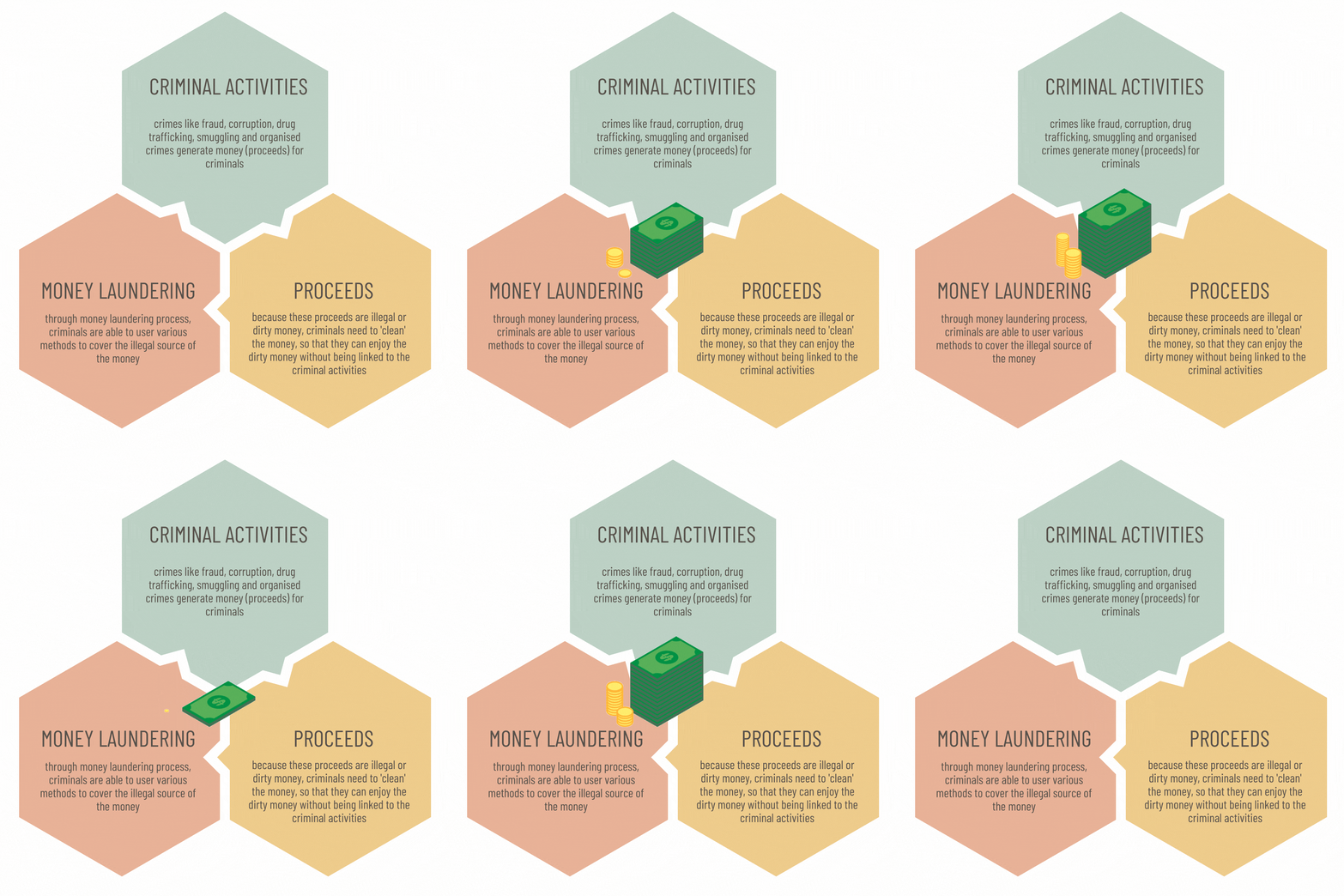
Serious offences (money laundering and terrorism financing related)
There are many offences under various laws which are linked to money laundering.
The full list of serious offences are listed in the Second Schedule of the AMLA.
Who can investigate money laundering cases?
Due to the link between serious offences and money laundering, investigations relating to money laundering are usually conducted together with an investigation on the offence which generated the illegal proceeds.
The law enforcement agency (LEA) which investigates a serious offence will also investigate money laundering offence relating to proceeds from the serious offence.
Examples of serious offences, the applicable law and the agency administering the law.
|
Serious offence |
Law |
Law Enforcement Agency |
|
Illegal deposit-taking |
Financial Services Act 2013 |
Bank Negara Malaysia |
|
Tax evasion |
Income Tax Act 1967 |
Inland Revenue Board |
|
Corruption |
MACC Act 2009 |
Malaysian Anti-Corruption Commission |
|
Cheating |
Penal Code |
Royal Malaysia Police |
|
Drug trafficking |
Dangerous Drugs Act 1952 |
Royal Malaysia Police |
Enforcement actions taken by BNM
As a regulatory and supervisory authority, BNM has the power to take enforcement actions against any person who contravene any of the laws administered by BNM, including the AMLA.
Enforcement actions taken by BNM have an important role in safeguarding the integrity of Malaysia’s financial system.
These enforcement actions under AMLA can be categorised into actions against regulatees or non-regulatees.
These are undertaken when any reporting institution fails to comply with their obligation under the law. Examples of offences under this category are failure to conduct customer due diligence, failure to submit reports to Bank Negara Malaysia or not keeping records for the required number of years. Penalties may be imposed on them.
These are undertaken when any person/entity commits an offence which falls under the purview of the Bank, for example, illegal deposit-taking or illegal remittance. These can be investigated concurrently with a money laundering investigation.
Enforcement actions by other supervisory authorities
Labuan Financial Services Authority and the Securities Commission, as supervisory authorities for their respective sectors, may also take enforcement action against reporting institutions under their supervision, for non-compliances with AMLA requirements.